Ah, the muffin top. That glorious, golden, often-crispy crown that many argue is the very best part of any muffin. For years, eager bakers would often fill their standard muffin tins to the brim, hoping for that delightful overflow that created the coveted “muffin top.” But what if you could skip the rest of the muffin entirely and go straight for the good stuff? Enter the Muffin Top Baking Pan – a revolutionary piece of bakeware designed specifically to give you nothing but pure, unadulterated muffin top perfection.
This specialized pan has become a favorite for home bakers and dessert enthusiasts alike, promising consistently uniform, perfectly browned, and satisfyingly textured muffin tops every single time. It’s not just about muffins, though; this pan is a surprisingly versatile tool that can elevate a wide array of sweet and savory creations in your kitchen.
The Journey of the Muffin Pan: From “Gems” to Golden Tops
To truly appreciate the muffin top baking pan, let’s take a quick stroll down memory lane to understand its origins. The concept of baking individual portions in molds isn’t new, but the modern muffin pan as we know it has a fascinating history. Initially, what we now call English muffins were flat, yeast-leavened dough cooked on a griddle in rings. The American-style muffin, however, a quicker, cake-like bread, emerged with the advent of chemical leavening agents in the late 18th century, making baking faster and easier.
The true precursor to today’s multi-cup muffin pan appeared in the mid-19th century. In 1859, Nathaniel Waterman of Boston, Massachusetts, patented what he called a “gem pan.” These heavy cast-iron molds, often with 7 to 12 shallow cups, were designed for baking small, dense quick breads, often made with whole wheat Graham flour, which were then called “gems.” The introduction of these pans significantly streamlined the baking process, allowing for consistent sizes and shapes, a far cry from individually shaping each muffin.
Over time, as baking technology advanced and ovens became more sophisticated, muffin pans evolved. Materials shifted from cast iron to lighter, more durable tin-plated steel, then to aluminum, and eventually to modern aluminized steel with non-stick coatings. The specific “muffin top” pan, with its distinctly shallow cups, emerged as a brilliant innovation, catering to the universal love for that crunchy, flavorful outer layer that defines a perfect muffin. It’s a testament to how specialized bakeware can enhance a beloved classic.
Understanding the Variety: Types of Muffin Top Baking Pans
Just like their traditional deeper-cupped cousins, muffin top baking pans come in a few different materials, each offering unique advantages for your baking adventures. Choosing the right one can make all the difference in your kitchen experience.
Non-Stick Metal Pans
These are perhaps the most common and widely appreciated. Crafted from materials like carbon steel or aluminized steel, these pans are known for their durability and excellent heat conduction. The key feature here is the non-stick coating, usually a silicone-based finish, which ensures your muffin tops pop out easily without sticking, even with minimal greasing. Carbon steel heats up quickly and evenly, promoting consistent baking and often resulting in perfectly browned tops with a delightful crisp edge. Aluminized steel combines the strength of steel with the even heating properties of aluminum, making it resistant to warping and ideal for uniform baking.
- Pros: Excellent heat distribution, very durable, easy release, typically dishwasher safe (though hand washing is often recommended for longevity of the non-stick coating).
- Cons: Can scratch if not cared for properly, some darker coatings might lead to deeper browning on the bottoms if not monitored.
Silicone Muffin Top Pans
Silicone pans offer a different approach to baking, prized for their flexibility and extreme non-stick properties. These pans are often lighter and allow for easy “popping out” of baked goods once cooled. They are heat-resistant and generally safe for both oven and freezer use. However, due to their flexible nature, silicone muffin top pans often require the support of a sturdy baking sheet underneath them when in the oven to prevent spills and ensure stability.
- Pros: Superb non-stick performance, very easy release, flexible for storage, often dishwasher safe.
- Cons: Less rigid, requires a baking sheet for support, may not conduct heat as evenly as metal, potentially leading to less uniform browning if not carefully monitored.
“When it comes to muffin top pans, the material really dictates your baking style,” advises Chef Anya Petrova, a veteran baker and culinary instructor. “Metal pans, especially those with good non-stick, offer that classic, even browning and crispness. Silicone is fantastic for effortless release and often for more delicate items, but always use a baking sheet with it to prevent wobbles in the oven.”
Your Guide to Selecting the Perfect Muffin Top Baking Pan
Choosing the right muffin top baking pan is more than just picking the first one you see. It’s about finding a tool that fits your baking habits and delivers the results you crave. Here’s what to look for:
Material Matters
As discussed, metal (carbon or aluminized steel with non-stick coating) offers great heat distribution and browning, while silicone provides excellent flexibility and release. If you prioritize crispy edges and even browning, a good quality non-stick metal pan is often your best bet. If easy removal and flexibility are paramount, silicone might be your preferred choice, just remember that baking sheet!
Size and Capacity
Muffin top pans typically come in 6-cup or 12-cup configurations, with shallower indentations than standard muffin tins. Consider how many muffin tops you typically want to bake at once. A 12-cup pan is great for batch baking or meal prepping, while a 6-cup pan is perfect for smaller households or when you just want a fresh batch for breakfast. The individual cup capacity also varies slightly by brand, but they are all designed to hold enough batter for just the top.
Durability and Construction
Look for pans made from heavy-gauge materials. This indicates a pan that is less likely to warp under high heat and will stand up to years of use. Reinforced rims on metal pans add to their structural integrity and make them easier to handle, especially when hot.
Ease of Cleaning
Most modern muffin top pans boast non-stick surfaces for easy cleanup. While many are advertised as dishwasher safe, hand washing with warm, soapy water and a soft sponge is often recommended to preserve the non-stick coating and extend the life of your pan. Always check the manufacturer’s care instructions.
Handles and Grip
Wider rims or silicone-gripped handles can be a small but significant detail. They provide a more secure grip, making it easier and safer to transfer the hot pan in and out of the oven, especially if you’re wearing bulky oven mitts.
Mastering Your Muffin Top Baking Pan: Tips for Success
Getting those picture-perfect, bakery-style muffin tops is easier than you think with these expert tips.
The Art of Non-Stick
Even with a non-stick pan, a little extra preparation goes a long way. Lightly grease the cups with butter, shortening, or a non-stick cooking spray before adding your batter. This tiny step ensures effortless release and contributes to that beautiful golden crust. For silicone pans, while often unnecessary, a light spray can sometimes aid in browning if you find your tops aren’t getting quite dark enough.
Filling Your Cups Just Right
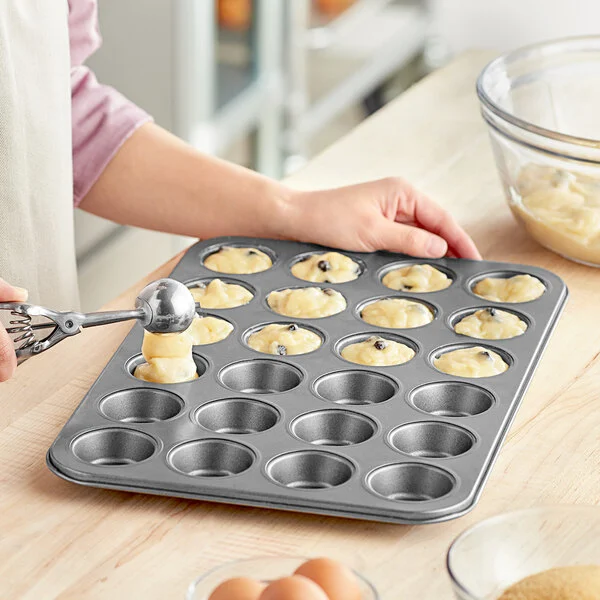
This is where the muffin top pan shines! Unlike standard muffin tins where you might fill 2/3 full, for muffin top pans, the goal is to fill the shallow cavities generously. Most recipes suggest filling them about 2/3 full, or even almost all the way to the top. The shallow design allows the batter to spread and create that signature flat-bottomed, domed top. “Don’t be shy with the batter in these pans,” advises baker Liam O’Connell. “The design is meant to embrace that spread, giving you a full, satisfying top without the excess of a regular muffin bottom.”
Temperature and Timing: A Delicate Dance
Muffin tops cook much faster than full muffins due to their thinner profile. A good starting point is to use your favorite muffin recipe’s recommended temperature, but reduce the baking time by about half to three-quarters. For example, if a regular muffin takes 20-25 minutes, your muffin tops might be ready in 10-15 minutes. Keep a close eye on them, especially towards the end. If you notice them browning too quickly, you can slightly reduce the oven temperature by 25-50°F (15-30°C) for the remaining bake time.
The Toothpick Test is Your Friend
To check for doneness, insert a clean toothpick into the center of a muffin top. If it comes out clean with no wet batter, they’re ready! A few moist crumbs are usually acceptable.
Patience in Cooling
Resist the urge to immediately remove your hot muffin tops from the pan. Let them cool in the pan for about 5-10 minutes. This allows them to set properly and makes for a much cleaner release, preventing them from falling apart. After this initial cooling, transfer them to a wire rack to cool completely.
Yes, You Can Use Your Favorite Muffin Recipe!
The beauty of the muffin top pan is its adaptability. You can absolutely use any of your go-to muffin recipes, whether from scratch or a boxed mix. The pan simply transforms your standard muffin batter into glorious muffin tops.
Beyond Breakfast: Creative Uses for Your Muffin Top Baking Pan
While “muffin top” is in the name, this pan is a true chameleon in the kitchen, offering endless possibilities for creative cooks. Don’t let it gather dust between muffin-making sessions!
- Breakfast Egg Cups: Whisk eggs with your favorite fillings (cheese, veggies, cooked meats), pour into the cups, and bake for quick, portioned breakfast delights that are perfect for meal prep.
- Mini Quiches: Use a store-bought pie crust or homemade pastry to line the cups, fill with a savory egg custard and your preferred fillings, and bake for individual quiches.
- Homemade Hamburger or Sandwich Buns: The shallow, round shape is perfect for baking soft, evenly sized buns that are ideal for sliders or breakfast sandwiches.
- Single-Serve Brownies or Cookies: Forget cutting squares! Bake individual brownie “rounds” or large, perfectly circular cookies with crisp edges.
- Crumb Cakes: Create individual crumb cakes with that irresistible streusel topping spread across a wider, shallower surface.
- Savory Potato Puffs or Mini Meatloaves: Combine shredded potatoes and cheese for delightful potato bites, or form mini meatloaves for easy, portioned dinners.
- Cornbread “Patties”: Ideal for serving alongside chili or stew, these shallow cornbread rounds offer more crust in every bite.
“I’m always telling my clients to think outside the box with their bakeware,” says culinary consultant Dr. Eleanor Vance. “A muffin top pan isn’t just for muffins; it’s a mold for creativity. From savory breakfast sandwiches to elegant mini desserts, its shallow design offers a unique texture profile that a standard muffin tin just can’t replicate.”
The Sweet Convenience: Benefits of Owning a Muffin Top Baking Pan
Investing in a muffin top baking pan brings a surprising array of benefits to your kitchen:
- Consistent Perfection: Say goodbye to sad, uneven muffin tops. This pan ensures every single one is uniformly baked, beautifully domed, and perfectly crispy.
- Ultimate Portion Control: Whether you’re making treats for a crowd or meal-prepping for the week, the individual cups provide ideal portion sizes.
- Unleashed Versatility: As we’ve seen, its utility extends far beyond just muffins, making it a valuable multi-tasking tool.
- Less Waste (for Muffin Top Lovers): If the top is truly your favorite part, why bake the rest? This pan lets you focus on what you love.
- Effortless Release: High-quality non-stick coatings mean less scraping and scrubbing, simplifying cleanup.
- Ideal for Meal Prep: Bake a batch of egg cups or mini burger buns at the beginning of the week for quick and easy grab-and-go meals.
Frequently Asked Questions About Muffin Top Baking Pans
Q: How much batter do I put in a muffin top pan?
A: Generally, you should fill the shallow cups about 2/3 full, or almost all the way to the top, allowing the batter to spread and create the signature wide, flat-bottomed muffin top.
Q: Can I use my regular muffin recipe in a muffin top pan?
A: Absolutely! Most standard muffin or cupcake recipes work perfectly in a muffin top pan. The pan simply adapts the shape and cooking dynamics of the result.
Q: How long do muffin tops bake compared to regular muffins?
A: Muffin tops cook significantly faster than full muffins. Expect baking times to be reduced by approximately one-half to three-quarters of your regular muffin recipe’s suggested time, typically between 10-15 minutes.
Q: Do I need to grease a non-stick muffin top pan?
A: While non-stick, a light coating of butter, shortening, or non-stick spray is recommended to ensure the easiest release and promote a beautifully golden, crispy crust.
Q: What are some creative uses for a muffin top pan besides muffins?
A: Muffin top pans are fantastic for making breakfast egg cups, mini quiches, homemade hamburger or sandwich buns, single-serve brownies, individual crumb cakes, and even savory potato puffs or mini meatloaves.
The Crown Jewel of Your Bakeware Collection
The muffin top baking pan is more than just a novelty; it’s a smart addition for any home baker who cherishes that perfectly crispy, golden muffin crown. From its humble origins as the “gem pan” to its modern, specialized design, it represents an evolution in bakeware that truly understands our culinary desires. Whether you’re a seasoned baker or just starting your journey, this pan opens up a world of perfectly portioned, deliciously textured treats, both sweet and savory. So go ahead, grab your pan, whip up a batch of batter, and savor the glorious, unadulterated pleasure of the muffin top. Your taste buds will thank you!